
-
Place of Birth
Warwick, Queensland, Australia
-
Place of Death
Brisbane, Queensland, Australia
Early life and education
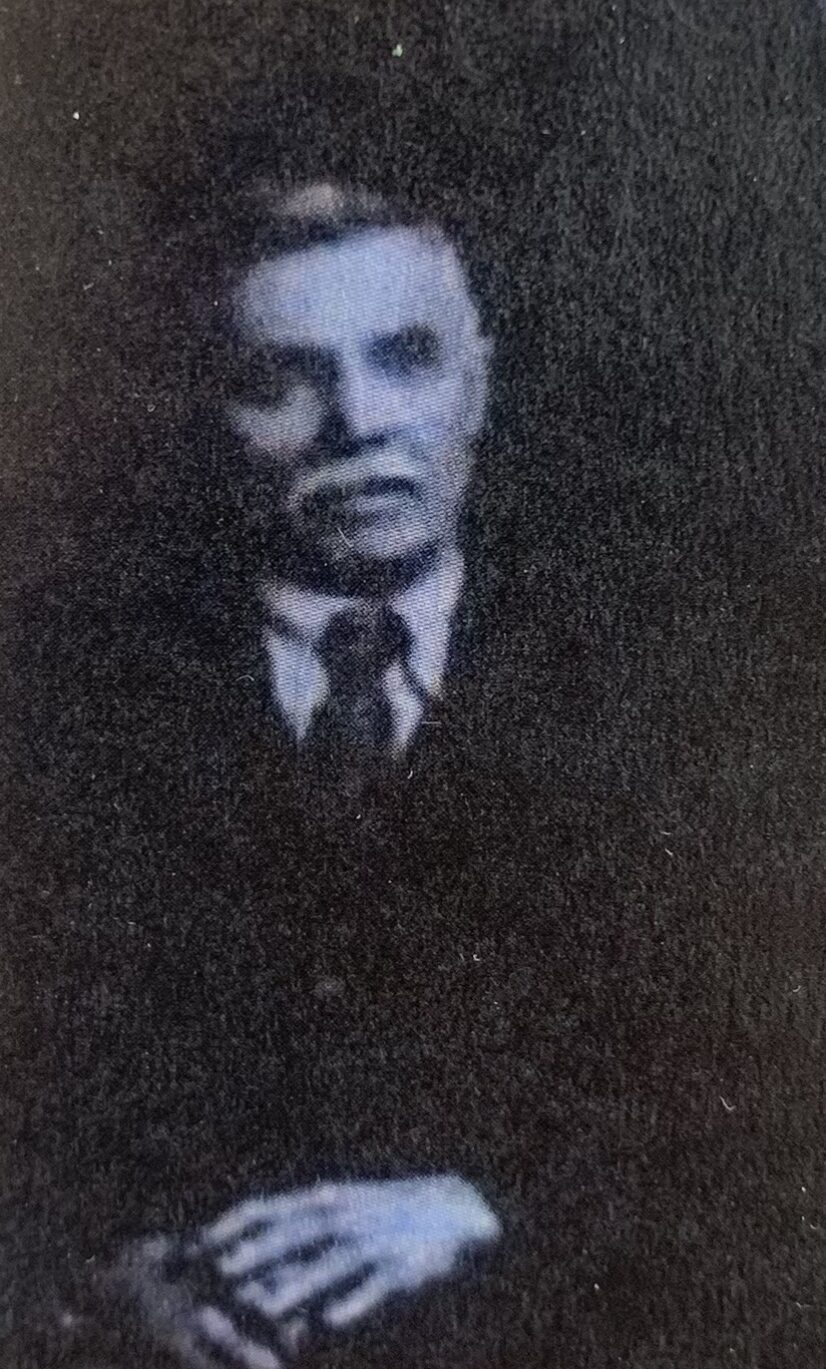
James Walter McGahan was born in 1871 in Rosenthal, Warwick, Queensland. He was the second child of Thomas Joseph McGahan and Johanna Maria McGahan (nee. Murphy), and their first son. His elder sister was Mary Elizabeth “Lizzie” McGahan, and he had also four younger siblings: Ann Magdalene “Annie”, Patrick John “Pat”, Jeremiah John “Jerry” and Thomas Joseph McGahan.
James was of direct Catholic Irish descent, his father born in County Tyrone, Northern Ireland and his mother in County Cork. His father, Thomas Joseph McGahan (the elder), was a farmer and a politician, and was the Cunningham (Darling Downs) representative in the Queensland Legislative Assembly from 1896-1899. He was known to be a strict, upright man, and was very well-educated.
James grew up on the family property in Warwick, which he would go on to purchase from his father in later years. It is unknown where he was educated, though his younger brother Thomas was one of the first students to attend Nudgee College when it opened in 1891.
Marriage and children
-
A New family
James married Johanna Mary “Hannah” Doyle on 20 May 1900, the same year that his mother, also Johanna, passed away. They lived on the Warwick property of James’ childhood, and which he purchased from his father in his early years of marriage. Johanna was one of five children, and had three sisters with whom she was very close. The youngest, Ellen “Nell” Doyle, married Redmond Heathwood, a man who became a very good friend of James.
James and Johanna were a silent pair, a trait associated with the Irish in their era. They lived a simple, farming life, and had five children together. The eldest were twins, Ellen “Nell” and Thomas “Tom” McGahan, born in 1902. Then Annie “Nance”, Catherine “Kit” and John James “Jack” McGahan in 1903, 1907 and 1909. Their daughters were educated at Warwick Convent, where they boarded with the Mercy Nuns. All three eventually went on to train as nurses at the Mater Hospital in South Brisbane.
-
Tragedy strikes
The family was struck with tragedy in 1925. The couple’s eldest son, Tom, committed suicide at 23, shooting himself in the Warwick house bathroom after a day out hunting, presumably with James, his father. The bullet hole was never removed from the bathroom ceiling, despite the house going through later renovations.
Five years later, in 1930, James and Johanna’s youngest daughter Kit was working as a nurse at the Mater when she started experiencing intense stomach pain. Falsely diagnosed with appendicitis, she died on the table of the operating theatre, at the young age of 23. The grief of these years haunted the family, who turned to their Catholic spirituality as a source of strength. James’ wife, Johanna, steadfastly dressed in black for her remaining decades.
-
A grandfather
By the second world war, James was a grandparent. His New Guinea-based daughter Nance and her husband Kevin Parer had Warwick, Kevin, Mary-Pat and Helen, the two youngest of whom were born mid-war. Nance returned from New Guinea to Warwick a widow in 1942, after her husband was killed in a Japanese air raid. She settled close by to the property, looking to her parents for extra support. James kept them well-stocked with milk, meat and other supples from the farm, and would drive the family to mass on Sundays. As grandfather, he was known as “Papa.”
Farming life
-
Warwick Property
James bought the Warwick property from his father (Thomas McGahan) post-retirement, taking over as the eldest son. It was predominantly a dairy farm, but they also kept pigs, geese and cattle dogs. The surrounding properties were all owned by relatives – his brother Patrick’s farm was adjoining, and his brother Jeremiah neighboured Patrick.
The house itself was an old Queenslander, with a large wooden stove. They lit lanterns with flares, boiled clothes in large copper pots, and warmed the iron on the stove, though they did eventually have electricity installed.
During the war years and the Depression the family would have been isolated, but James and Johanna were hard workers, and the farm was prosperous – they would not have financially struggled. James worked out in the fields while Johanna worked inside, keeping the household and churning butter and cream. They lived with the consistency necessary for a farming life, governed by strict routine. They rose and retired with the sun, and every night James ate the same supper: bread cooked in milk and sugar.
The farm occasionally experimented with their products. James started growing sunflowers out the front of the house, for sunflowers seeds, an attempt to produce a dairy free alternative to butter.
-
Political involvement
James was very involved in his community, and in local agricultural politics. In Warwick he was on the Dairy Board and the Farmers’ Mill Board. But he was not at all politically outspoken, keeping his views to himself.
Religion
Raised by Irish Catholic parents, James was always a religious man. He attended Sunday mass all of his life, dressing smart and taking the car. In his old age, his granddaughter Helen would clean his shoes each Saturday for mass the next day. He slept with a picture of the sacred heart in his bedroom, which he would pray to each night.
In 1907, James donated to the opening of Emu Vale Catholic Church.
Retirement
After the second world war, James retired from the Warwick property and moved to Plimsoll St, Brisbane, with Johanna. But Johanna soon grew ill. She went to stay with Nance at 90 Victor Street, Holland Park, and died here in 1952. James outlived his wife by 10 years. Now alone, he moved in with their daughter’s family, taking her place.
James slept in what used to be the shared bedroom of his grandsons, Warwick and Kevin. Though retired from farm life, he remained steadfast in his daily routine, keeping himself busy. Every morning he would wake at 5am, enjoy a cup of tea and a piece of bread, then go about his morning yard chores. Nance kept James well fed throughout the day – porridge with cream and sugar at 8am, a hot meal at midday, followed by dessert. Fruitcake and tea at 3pm, a small glass of rum at 5pm, then his traditional bowl of bread and milk. Nance detested serving him rum, and started to water it down, behind his back.
James’s days were spent out in the yard, keeping it maintained. He would regularly rake, and would feed the chooks and clean their pen. At rest, he was often found in a particular chair by the back door, reading the newspaper. He read all the funeral notices, sharing them with the family, and also kept up to date with the weather, which he had an excellent nose for.
He remained a silent man in his old age. His brother-in-law, Redmond Heathwood, would visit on occasion, and they would talk outside for hours. According to his granddaughter, Helen, James’ contributions to the conversation consisted mostly of “mmm”, “yes yes” and other such responses.
Death
James died on the 21st September 1964, in the household of his daughter Nance. Lying on his deathbed, he spoke his last words: “sacred heart of Jesus I place my trust in you.” Nance called all of the grandchildren to share the news, all of whom were devastated to learn he had passed.
In 1962, two years before his death, his granddaughter Helen wrote in her journal of James:
I loved my grandfather, Papa.
A man of few words. Straight, silent, consistent.
I loved the smell of his tobacco pipe.
I loved the roses at Plimsoll St and his chooks in the back yard.
I loved to watch him sit in the back yard reading the paper. I loved his comment on the weather.
I loved to watch him rake the leaves and burn the rubbish.
I loved to help him find whatever he had lost.
I loved to watch Mum trim his moustache and to help her make his bed.
I loved to clean his shoes on Saturday night ready for Mass on Sunday morning.
I loved the way he did not get involved in our lives. I loved my Grandfather.
He did not speak unnecessarily. He did not gossip or criticise.
He appeared at home with himself and his memories.
He was independent. He did not give up his daily routine –
up with the sun and to bed with the sun.
I loved my grandfather. He loved me. I know!
Yet, he never told me. He never hugged me. He never kissed me.
He didn’t have to. I knew he loved me, and I loved him.